If you are seeking relief from chronic pain or looking to improve your posture in Los Angeles, you’ve likely come across two terms: Rolfing and Structural Integration. At first glance, they seem identical. Both involve a systematic approach to the body’s connective tissue (fascia — you can learn more in my article What Is Fascia?), and both typically follow the famous 10-Series process. However, for the discerning client, the distinction lies in the lineage, philosophy, and the clinical application.
The Common Root: Dr. Ida Rolf
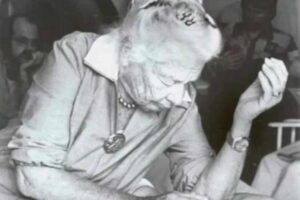
Every practitioner of this method owes their craft to Dr. Ida Rolf. She developed this breakthrough system of manual therapy she called Structural Integration in the mid-20th century.
Dr. Rolf’s core insight was revolutionary: The body is a structural entity that exists within the field of gravity. If the segments of the body (head, shoulders, thorax, pelvis, and legs) are misaligned, gravity becomes a destructive force, potentially leading to chronic back pain, restricted movement, and fatigue. The core principle is to integrate the human structure around a central vertical axis, called the Line. Gravity then becomes a constructive force, creating lift, a sense of lightness, and support within the body. This is a very different feeling than what you may experience after a massage or deep tissue massage.
So, What is “Rolfing”?
“Rolfing” is simply a nickname that stuck. It would become the trademark for the Dr. Ida Rolf Institute. Whether you call it Rolfing or Structural Integration, the science behind the method remains focused on the same goal: reorganizing the body’s fascial network.
Why I trained through the Guild
Structural Integration is the actual name Dr. Rolf chose for her work. She gave a lot of thought to this, and it most accurately described what she was trying to do.
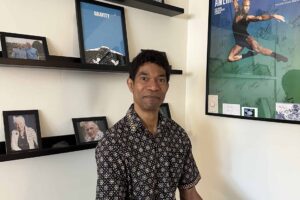
I am a 2007 graduate of the Guild for Structural Integration. In 2012, I completed the Advanced Certification. All my teachers were trained directly under Dr Rolf. I am a second generation practitioner. This is very rare.
The Guild was historically known for teaching the authentic work of Dr. Rolf. The other major schools of this work teach a variation of it. I chose the Guild because authenticity meant the most to me. There is no right or wrong, it is just what I value the most.
The challenge for the practitioner of Structural Integration, which my teachers presented to me, was to keep doing it. Do it better. See it better. Embody it. That’s where the understanding comes from — within the depths of the work itself. By understanding the 10-Series, it opens for infinite possibilities. Additionally, each session of the 10-Series offers a beautiful and profound experience for the client. This is a journey for each of us, and it is an incredible one.
This unique perspective comes from who I am as a person, from the work itself, and from searching deep inside the work, not by going outside of it. My teachers: David Davis, Neal Powers and Emmett Hutchins, and the entire Guild family, including Susan Melchior and Richard Stenstadvold, all extended their arms with love, and openness to me, and told me to do the 10-Series (aka The Recipe) – again, and again.
At Craig Dunham Advanced Structural Integration, I use the term Rolf Method with pride. While my clients often use the term “Rolfing,” I prefer Structural Integration because it accurately describes the clinical science of what we achieve together.
The Craig Dunham Approach: Authenticity in the 10-Series
My practice is built on the conviction that the original 10-Series is a complete system — not something to be modified or added to, but something to be understood more deeply. This is what creates long-term structural change rather than temporary relief. When the body is properly organized in gravity, it stops fighting itself. Chronic pain, tech-neck, poor posture — these are not isolated problems. They are expressions of a body that has lost its Line. The work is to find it again.
Why the Distinction Matters for You
I tell my clients, the only limit of this work is the practitioner’s understanding of the 10-Series and their imagination. That is why I’ve done it over and over. I am a practitioner of Structural Integration. It is what I do. When you’re ready to organize your structure to a higher level of integration and live in that new space, really embody it, for whatever reason: chronic pain relief, tech-neck, better posture, or you want to express and experience yourself at your highest, most authentic level, I’m ready to help you on your journey.
Frequently Asked Questions
What is the difference between Rolfing and Structural Integration?
Rolfing and Structural Integration refer to the same foundational work developed by Dr. Ida Rolf. Rolfing became the registered trademark of the Dr. Ida Rolf Institute. Structural Integration is the actual name Dr. Rolf chose for her work. Different schools teach variations of this work. At Craig Dunham Advanced Structural Integration, I practice the unadulterated work of Dr. Rolf as taught through the Guild for Structural Integration.
What is the Guild for Structural Integration?
The Guild for Structural Integration was the original name for the school Dr. Ida Rolf opened with her two personally selected students, Emmett Hutchins and Peter Melchior. It was later renamed the Rolf Institute. From its original inception in 1971, to its return in 1989, the Guild has historically been known for maintaining the most authentic and traditional approach to teaching Structural Integration — unchanged from how Dr. Rolf taught it.
What does Advanced Practitioner mean?
An Advanced Practitioner has completed both the foundational training and an additional Advanced Certification in the Rolf Method of Structural Integration. I completed my Advanced Certification in 2012, in a historic class — the first time Emmett Hutchins and Neal Powers taught the Advanced Class together.
If you’re ready to experience the work firsthand, I’d be honored to work with you.
Rolfing is a trademark of the Dr. Ida Rolf Institute. Craig Dunham is an Advanced practitioner and graduate of the Guild for Structural Integration and practices the Rolf Method of Structural Integration in Los Angeles and Santa Monica.